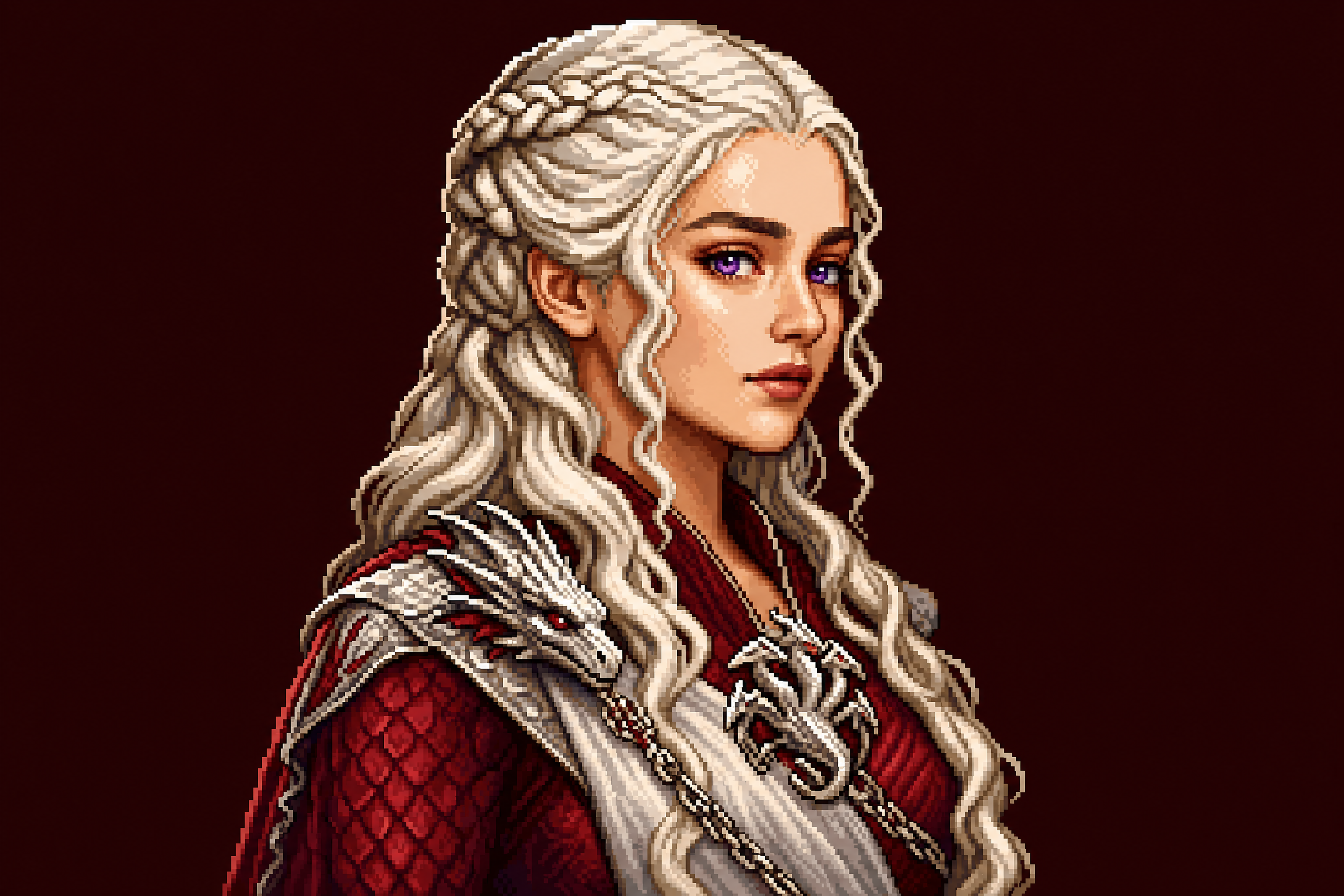
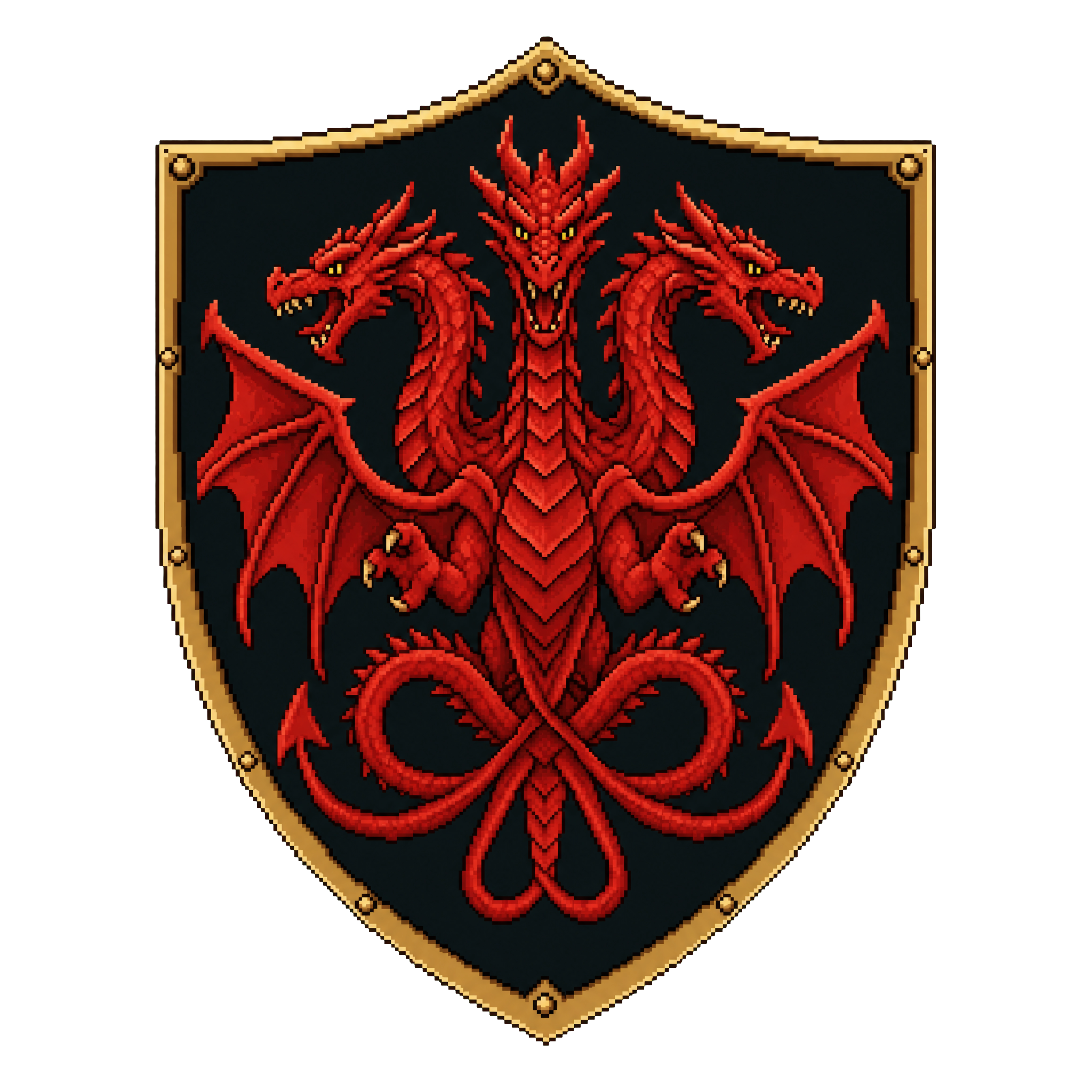
Last trueborn daughter of Aerys II, brought forth on Dragonstone in a summer gale that scattered what remained of the Targaryen fleet and gave her the name she would bear ever after: Stormborn. Her mother, Queen Rhaella, named her with a dying breath and then left her to a world that already wanted her dead. Of the dynasty that had ruled the Seven Kingdoms for two hundred and eighty-two years, only an orphaned princess and a half-mad boy of seven remained.
She was carried out of Dragonstone the night before Stannis Baratheon's fleet beached its boats, smuggled to the Free Cities by a few loyal hands who soon spent themselves out and fell away. Her childhood was a slow circuit of strangers' houses across Braavos, Myr, Tyrosh, Qohor, Volantis, and Lys, the two children kept by sufferance and by the weight of Viserys's plate-and-dragon coin, which dwindled each time a magister grew weary of housing exiles. She remembered red doors and a lemon tree under a window, and little else of warmth; for the rest of it she remembered her brother's hand on her shoulder growing tighter, and the way he would whisper into her hair that she must not wake the dragon. By the time they came to Pentos and Magister Illyrio Mopatis took them into the house with its three towers and its bath of hot, perfumed water, Viserys had stopped speaking of patience altogether, and was already weighing what Targaryen blood might be traded for an army.
On her thirteenth nameday she was wed to Khal Drogo of the Dothraki at the foot of the Mother of Mountains, sold for ten thousand riders her brother would never command. The wedding feast left a dozen men dead, gifted her a silver mare from her husband, a clutch of dragon eggs from Illyrio, and a small store of books from Ser Jorah Mormont of Bear Island, who had crept into Drogo's khalasar a step ahead of a slaver's noose and remained to advise her. The journey east to Vaes Dothrak hardened her saddle by saddle, until she rode at her husband's side rather than behind him and was greeted by the dosh khaleen as a khaleesi in her own right. When her belly began to swell with Drogo's son, the crones of the temple prophesied a stallion who would mount the world, and Daenerys, who had been a frightened girl in a Pentoshi manse a year before, began to believe she might birth kings.
The dream broke at the Lhazareen village near the Womb of the World, where a small cut on Drogo's chest grew septic and a captive maegi named Mirri Maz Duur traded her unborn child's life for a husband who would never wake. Daenerys laid Drogo on a pyre at the edge of the Dothraki sea, his bloodriders and his stallions and his treasure piled around him, the three eggs of Illyrio at his heart, and Mirri herself bound screaming to the wood. When the flames had eaten everything that could burn she walked from the ashes naked and unhurt with three newborn dragons curled around her (Drogon black and red, Rhaegal green and bronze, Viserion cream and gold), the first dragons hatched in the world since the death of the last Targaryen wyrm a century and a half before. The few dozen Dothraki who remained named her Mhysa in tongues they did not yet know, and followed her east across the Red Waste to whatever came after.
What came after was Slaver's Bay. In Astapor she gave Drogon, briefly, for the eight thousand Unsullied of the Good Masters, and then loosed her dragon and her soldiers together to slaughter the Good Masters in their own plaza, freeing every slave in the city and renaming herself Breaker of Chains. Yunkai opened its gates after a single night of war and a few quiet hours with three sellsword captains; from the walls the freed slaves cried Mhysa, Mhysa, until her advisors thought the word a benediction and her enemies a threat. At the gates of Meereen she crucified a hundred and sixty-three Great Masters along the road in answer to the slave-children they had crucified to mark her march, took the city through its sewers with a champion's death and a hundred Unsullied who slipped past a postern, and seated herself on the bench of the harpy as queen of a city she did not know how to rule. Beyond the bay her name became a rumour and then a banner: every freedman from Qarth to Volantis came east to find her, and every slaver from Volantis to Yunkai sent gold the other way to be rid of her.
She remained in Meereen rather than sail at once for Westeros, because she had freed cities she could not leave behind and ruled a city that had begun, in alleys and in the cellars of pyramids, to murder its freedmen one by one beneath the cowl of a golden harpy. To buy a peace she did not believe in she opened the fighting pits, married Hizdahr zo Loraq of an old Ghiscari house, and locked Viserion and Rhaegal in a deep stone pit when Drogon, having killed a small girl in a field beyond the city, vanished into the Dothraki sea. The peace held for a single afternoon: at the reopened pit of Daznak the locusts in the honeyed cakes were poisoned, the Sons of the Harpy rose in the tiers, and Drogon came down upon the bloody sand in answer to a need he could not have known. She climbed onto his back as he bled from a hundred small wounds, lifted a fighter's whip, and flew east over the gulf with the city she had won shrinking beneath his wings, leaving Meereen to her council, leaving Westeros across the world, leaving the question of where she now belonged to be answered, at last, in the green grass of the Dothraki sea where Drogo had once promised her the world.